You have 0 items in your cart

Original price was: ₹550.00.₹500.00Current price is: ₹500.00.
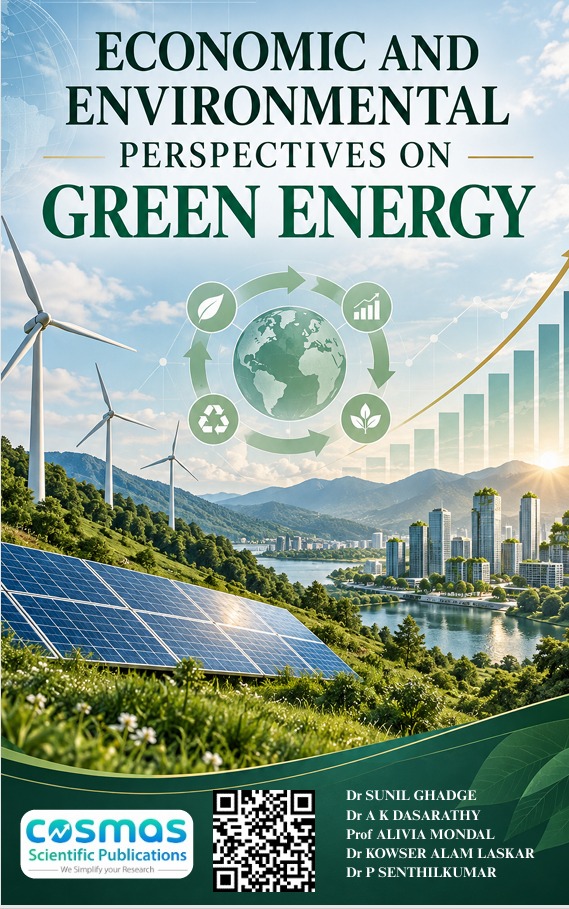
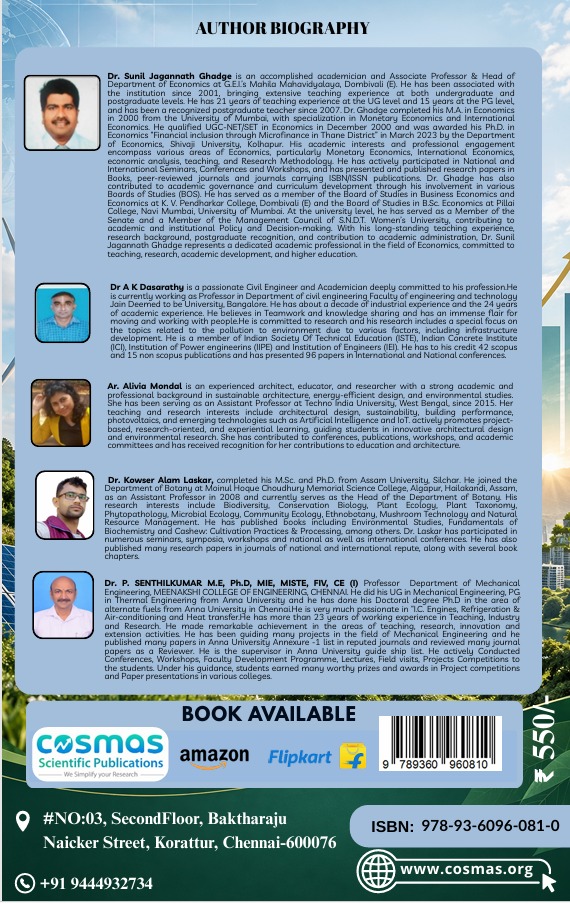
Authors: Dr SUNIL GHADGE, Dr A K DASARATHY, Prof ALIVIA MONDAL, Dr KOWSER ALAM LASKAR, Dr P SENTHILKUMAR
In an era characterized by increasing concerns about climate change, the depletion of fossil fuel resources, and the growing demand for sustainable development, the transition toward green energy has emerged as a crucial pathway to achieving a more environmentally responsible and economically sustainable future. The economics of green energy focuses on the complex relationship between environmental protection and economic development. Its primary objective is to establish a practical balance between ecological sustainability and economic growth while addressing the pressing challenges associated with climate change. At the heart of this transition is the shift from conventional fossil fuel-based energy sources, including coal, oil, and natural gas, toward renewable alternatives such as solar, wind, hydropower, geothermal energy, and biomass. These renewable resources provide significant environmental advantages because they rely on naturally replenishing sources of energy. Their wider adoption can help reduce greenhouse-gas emissions, minimize air and water pollution, and lower the ecological impact of energy generation and consumption. Nevertheless, the transition to green energy also creates a complex economic environment that requires careful evaluation. Several
important factors must be considered, including: Initial Investment and Long-Term Economic Benefits: One of the major challenges associated with the adoption of renewable energy is the relatively high initial investment required for infrastructure and installation when compared with conventional fossil-fuel-based systems. Although these upfront expenses can be substantial, renewable energy technologies can provide considerable long-term economic advantages through lower operating and maintenance costs. In addition, they can reduce dependence on fossil fuels and provide greater protection against fluctuations and uncertainty in conventional fuel prices.
-Authors
| Format | Paperback |
|---|---|
| Date of publishing | September 2026 |
| Lanuguage | English |
| No.of pages | 346 |