You have 0 items in your cart

Original price was: ₹550.00.₹500.00Current price is: ₹500.00.
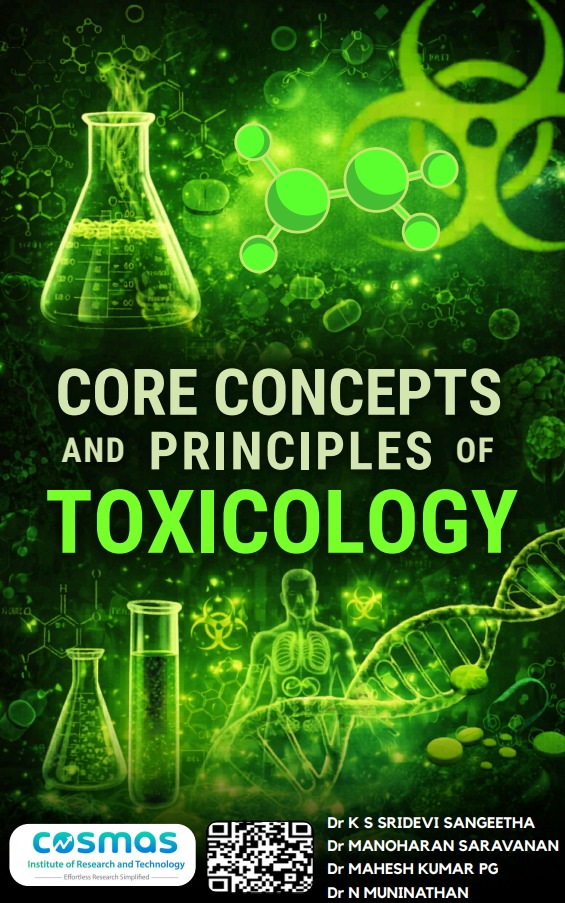
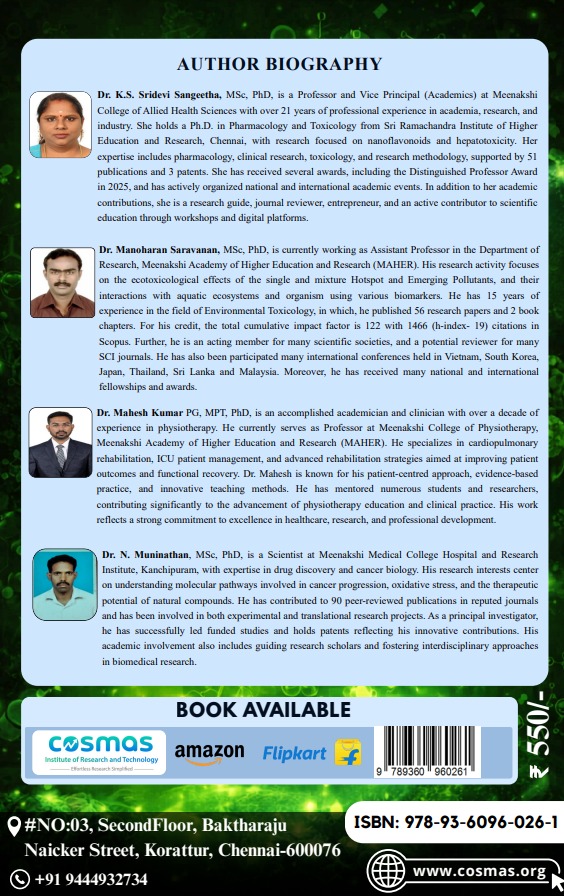
Authors: Dr K S SRIDEVI SANGEETHA, Dr MANOHARAN SARAVANAN, Dr MAHESH KUMAR PG, Dr N MUNINATHAN
Chemicals—both natural and synthetic—are an integral part of our environment and daily lives. Humans have long interacted with these substances, making it essential to understand their effects on both human health and ecosystems. This book provides an in-depth exploration of toxicology, focusing on how toxic substances interact with biological systems. The text begins by emphasizing the importance of chemicals in modern life and the regulatory frameworks that govern their safe use. Toxicology, defined as the study of the harmful effects of chemical on living organisms, is presented as a crucial discipline for ensuring public and environmental safety. Key terminology and foundational concepts—such as somatic, germline, and stem cells, along with the principle of homeostasis—are explained in a clear and structured manner.
Further, the book examines how chemicals cause harm, distinguishing between acute and chronic exposure. It categorizes toxicants into various groups, including air pollutants, soil
contaminants, occupational hazards, and agricultural chemicals. A wide range of toxic substances is discussed, from heavy metals like lead and mercury to pesticides, herbicides, and biological toxins produced by insects, algae, and fungi. A major focus is placed on toxicokinetic, which studies how the body processes toxic substances through absorption, distribution, metabolism, and excretion (ADME). Special attention is given to the liver’s critical role in detoxification and metabolic transformation. The book also explores the cellular and molecular mechanisms of
toxicity, including the effects of reactive metabolites, covalent binding, disruption of calcium balance, and the formation of free radicals.
Advanced approaches such as omics-based mechanistic toxicology—covering genomics, proteomics, and metabolomics— are introduced to provide a modern perspective.
In addition, the environmental and physiological impacts of toxic substances are examined, highlighting their effects on key organ systems such as the liver, kidneys, immune system, respiratory system, and nervous system. The role of endocrine-disrupting chemicals and their implications for both human health and ecological balance are also discussed. A significant section is devoted to toxicity risk assessment and public health protection. Topics include hazard identification, dose– response relationships, exposure assessment, and strategies for toxicity prevention. Regulatory considerations and the importance of controlling toxic exposures in domestic, occupational, and environmental settings are emphasized. Ultimately, this book seeks to raise awareness about environmental pollution and the importance of toxicological education. It encourages individuals and communities to make informed decisions that promote health, safety, and sustainability. This comprehensive guide is intended for students, researchers, policymakers, and anyone interested in understanding the complex interactions between chemicals, human health, and the environment. It is our hope that this work will not only inform but also inspire proactive efforts toward a safer and more sustainable future.
| Format | Paperback |
|---|---|
| Date of publishing | May 2026 |
| Lanuguage | English |
| No.of pages | 214 |